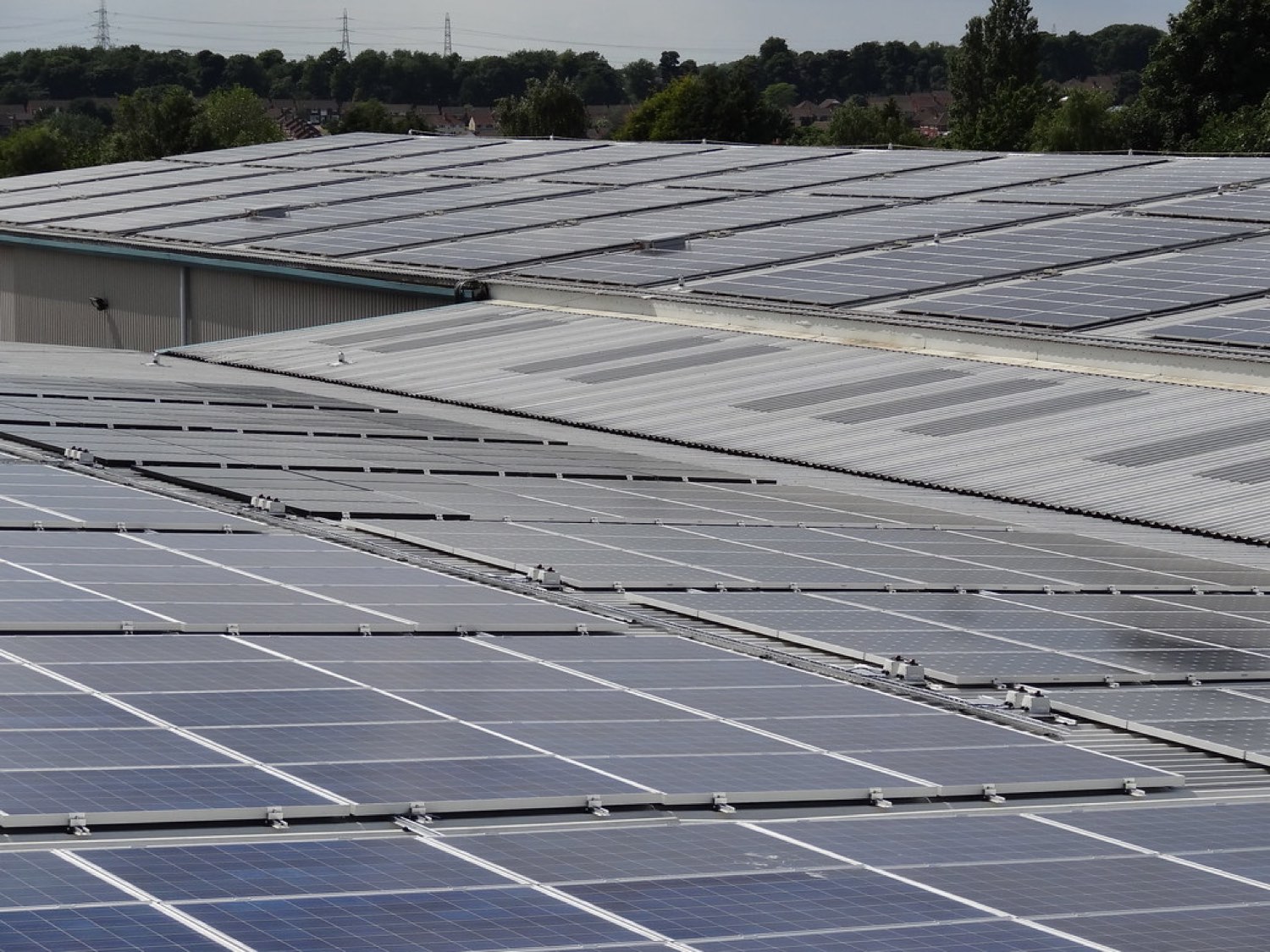
Solar asset management is the practice of monitoring, maintaining, and growing the systems you have already installed across their full 25-year life, instead of treating each job as a one-time sale. For installers, it converts a static installed base into recurring revenue through service plans, performance guarantees, and follow-on hardware like batteries and EV chargers. The systems are already yours to watch, so the revenue is already on the table.
Key takeaways
- Every system you install is a 25-year asset, not a closed ticket. Monitoring is how you keep earning from it.
- Fleet-wide monitoring catches faults and slow underperformance that homeowners never notice, protecting your production guarantees and your reviews.
- Service plans, maintenance visits, and battery or EV upsells are recurring revenue lines that cost far less than chasing new leads.
- Battery and added-load upgrades qualify customers for the 30% federal credit, giving you a built-in reason to call.
- A single dashboard across your whole fleet, plus a customer-facing app, makes the service motion practical at scale.
- What solar asset management actually means
- Why your installed base is your best lead list
- Monitoring is the foundation, not a feature
- The recurring revenue streams hiding in your fleet
- Protecting production guarantees and your reviews
- Upsell triggers: batteries, EV chargers, expansions
- Building a recurring-revenue service motion
- Why installers leave fleet revenue on the table
- How Enact supports fleet asset management
You closed the sale, the crew finished the install, the inspector signed off, and the system went live. For most installers, that is the end of the relationship. The customer drops off the radar until something breaks or a neighbor asks for a referral. Meanwhile that array sits on the roof producing power for the next two and a half decades, and you have no idea how it is doing.
That gap is where recurring revenue lives. A solar system is not a product you ship and forget. It is a long-lived asset that needs watching, occasionally needs service, and routinely grows as the customer's energy needs change. Treat your installed base that way and it stops being a pile of finished jobs. It becomes a portfolio that pays you year after year.
What solar asset management actually means
Solar asset management is the ongoing work of monitoring, maintaining, and improving the systems you have installed across their operating life. In commercial solar this has been standard practice for years, because a fund that owns hundreds of megawatts cannot afford silent underproduction. The same logic applies to a residential or small-commercial installer, just at a different scale.
The core idea is simple. A panel installed today will run for roughly 25 years, losing only a small fraction of its output annually as it degrades. The U.S. Department of Energy notes that solar modules degrade slowly and predictably over a long service life, which means problems show up as gradual drift, not dramatic failure (DOE). Someone has to be watching the data to catch that drift. If it is not you, it is nobody.
Why your installed base is your best lead list
The math on customer acquisition is brutal. Quoted residential installs run in the rough range of $20,000 to $30,000 before incentives depending on system size and region (EnergySage), and a meaningful slice of that price is sales and marketing cost. Every new lead carries that overhead. A customer you already installed for does not.
You already have their roof measurements, their utility data, their consumption profile, and a relationship that started with them trusting you enough to put hardware on their home. That is the most expensive part of any solar transaction, and you have already paid for it. A battery quote to an existing monitored customer is a warm conversation about data they can see, not a cold pitch.
So the installed base is two things at once. It is a service obligation, and it is the cheapest pipeline you will ever build. Most installers see only the first.
Think about scale. An installer who has put up 500 systems over five years is sitting on roughly $12 million in deployed hardware that someone else could be servicing. If even a third of those homeowners eventually add a battery, expand their array, or sign a paid service plan, the follow-on revenue rivals a strong year of new bookings, without the marketing spend that new bookings demand. The relationships are already built. The only question is whether you stay in them.
Monitoring is the foundation, not a feature
Everything in asset management depends on knowing what each system is doing. Without monitoring you are blind. A string goes offline in February, the customer does not notice because their bill is seasonal anyway, and you find out in July when they call angry about a true-up charge. By then you have lost months of production and a chunk of goodwill.
Fleet monitoring flips that. A dashboard that shows every system you have installed lets you spot the one inverter that dropped out, the array that is producing 15 percent under model, the battery that stopped cycling. You see it the day it happens, not the day the customer complains. That early signal is what makes every downstream revenue line possible.
It also changes the customer's experience. When a homeowner can open an app and watch their savings add up, the system stays top of mind. When you proactively call to say you noticed an issue and already dispatched a fix, you look like a partner, not a vendor who vanished. The Department of Energy's guidance for homeowners points buyers toward systems with clear performance visibility for exactly this reason (DOE).
The recurring revenue streams hiding in your fleet
Once you can see the fleet, several income lines open up that have nothing to do with finding a new customer. Some are direct fees, some are hardware sales, and some protect revenue you would otherwise lose. Here is how they compare.
| Revenue stream | What it requires | Why customers pay |
|---|---|---|
| Monitoring + service plan | Fleet dashboard, alert workflow | Peace of mind, faster fixes, protected savings |
| Preventive maintenance visits | Scheduling, basic field crew time | Avoid costly failures, keep production high |
| Performance guarantee backing | Production data, response process | The guarantee they bought is only as good as your monitoring |
| Battery add-on | Existing system data, install crew | Backup power, bill control, 30% federal credit |
| EV charger install | Load assessment, electrician | New car, faster home charging, credit eligibility |
| System expansion | Roof and usage review | Higher bills, added load, new household needs |
| Referral generation | Happy, engaged customers | Trust earned over years of visible performance |
None of these rows requires a single new cold lead. They all run off relationships and data you already own. The service plan alone, priced as a modest annual or monthly fee, can turn a fleet of a few hundred systems into a predictable revenue base that smooths out the lumpy nature of install bookings.
Protecting production guarantees and your reviews
Many installers sell a production guarantee, promising the system will generate a stated amount each year or the customer gets a credit. That promise is a liability if you cannot see whether you are meeting it. Monitoring turns the guarantee from a risk into a selling point, because you can prove performance and fix shortfalls before they trigger a payout.
There is a reputation angle too. Solar buyers research heavily, and independent reviewers stress long-term reliability and post-install support as deciding factors (Consumer Reports). A customer whose system quietly underproduced for a year writes a one-star review. A customer you called proactively writes a five-star one and sends you their brother-in-law. Your monitoring practice is, in effect, your review-generation engine.
The Department of Energy emphasizes that a photovoltaic system's real-world output depends on sustained performance and efficiency over its decades-long life, which makes ongoing measurement, not just the day-one install, the thing that determines actual energy and savings.
U.S. Department of Energy, Solar Performance and Efficiency
Upsell triggers: batteries, EV chargers, expansions
The richest follow-on revenue comes from hardware, and the federal tax code hands you the timing. The Residential Clean Energy Credit covers 30 percent of the cost of qualifying solar and battery storage installed at a home (IRS). Battery storage added to an existing system qualifies on its own, and ENERGY STAR confirms the credit applies to solar and related storage equipment (ENERGY STAR). That credit is a reason to call every monitored customer who does not yet have a battery.
Watch the data and the triggers reveal themselves. A customer whose consumption jumped likely bought an EV, which means a charger sale and possibly an expansion. A customer in an area with frequent outages is a battery candidate. A household whose usage outgrew its original array needs more panels. You are not guessing at any of this. The monitoring tells you who to call and why, and the tax credit tells you when.
Building a recurring-revenue service motion
Knowing the streams exist is different from running them. A service motion is a repeatable process, not a good intention. Here is what one looks like in practice.
- Put every installed system on one monitoring dashboard, including jobs you finished years ago.
- Set alert thresholds so underperformance and outages reach your team automatically.
- Define a service plan with clear pricing, response times, and what the customer gets.
- Give every customer the monitoring app at handoff so engagement starts on day one.
- Run a quarterly fleet review to flag battery, EV, and expansion candidates from usage data.
- Time hardware outreach around the 30% federal credit so the value is concrete.
- Track which systems are out of warranty and which guarantees are at risk.
- Ask engaged, well-performing customers for referrals at the moment they see strong savings.
Start with the dashboard and the app. Those two pieces make everything else possible, because you cannot sell a service plan on systems you cannot see, and you cannot keep customers engaged with hardware you handed off and never mention again.
Why installers leave fleet revenue on the table
The reasons installers miss this revenue are consistent, and most are fixable once you name them.
- Treating install as the finish line. The job ends at commissioning in the installer's mind, so nobody owns the next 25 years.
- No single view of the fleet. Systems sit on a mix of inverter portals with different logins, so monitoring at scale never happens.
- Reacting instead of watching. The team only hears about a system when it fails badly, long after production and trust have leaked away.
- Leaving the customer in the dark. Without an app, the homeowner forgets the system exists, so there is no relationship to upsell into.
- Pricing service at zero. Free truck rolls feel like good service but they train customers to expect support for nothing and bleed margin.
- Ignoring the tax-credit calendar. Battery and EV outreach happens randomly instead of when the 30% credit makes the pitch easiest.
Each of these is a habit, not a hard constraint. The installers building durable businesses are the ones who decided the relationship starts at install rather than ending there. They put a name on the post-install years, give that role real tooling, and price service so it earns its keep. Once the fleet is visible and the customer is engaged, the revenue follows on its own schedule.
How Enact supports fleet asset management
The practical blocker for most installers is tooling. You cannot run a service motion across a few hundred systems by logging into a dozen inverter portals one at a time. You need the whole fleet in one place and the customer engaged in another.
Enact gives installers a single view of fleet performance, so you can spot the underperforming system, the offline inverter, and the upsell candidate from one dashboard instead of chasing logins (Enact for installers). The Enact Home app puts savings, production, and alerts in the customer's hands across the full life of ownership, which keeps them engaged and makes the next conversation about a battery or charger a natural one (Enact Home app). The asset is already yours to manage. The tools are what make managing it pay.
Frequently asked questions
What is solar asset management?
Solar asset management is the ongoing practice of monitoring, maintaining, and improving installed solar systems across their full operating life, which runs about 25 years. It treats each system as a long-lived asset rather than a finished job, catching faults and slow underperformance through continuous monitoring. The U.S. Department of Energy notes that real output depends on sustained performance, not just the day-one install.
How can installers earn recurring revenue from solar?
Installers earn recurring revenue from their existing base through monitoring and service plans, preventive maintenance, performance-guarantee backing, and hardware upsells like batteries, EV chargers, and system expansions. These run off relationships and data you already own, which is far cheaper than acquiring new customers given install prices that commonly fall in the $20,000 to $30,000 range before incentives. A fleet dashboard and a customer app make the motion practical, as outlined for Enact installers.
Why does monitoring matter after installation?
Monitoring matters because solar systems degrade slowly and fail quietly, so problems show up as gradual production drift that homeowners rarely notice on their own. Without monitoring, an offline string or underperforming array can run for months before anyone catches it, costing production and trust. The DOE homeowner guide points buyers toward systems with clear performance visibility for this reason.
Do battery and EV upgrades qualify for the federal tax credit?
Yes. The Residential Clean Energy Credit covers 30 percent of the cost of qualifying solar and battery storage installed at a home, and battery storage added to an existing system qualifies on its own per the IRS. ENERGY STAR confirms the credit applies to solar and related storage equipment, which makes these upgrades a natural reason to contact existing customers.
How does fleet monitoring protect production guarantees?
A production guarantee promises a system will generate a stated amount each year, so it is only as reliable as your ability to see whether you are meeting it. Fleet monitoring catches shortfalls early enough to fix them before they trigger a payout, turning the guarantee from a liability into a selling point. Independent reviewers stress long-term reliability and support as deciding factors for buyers (Consumer Reports).
What is the difference between a one-time install and an asset-portfolio mindset?
A one-time-install mindset ends the customer relationship at commissioning and chases the next lead. An asset-portfolio mindset treats every installed system as a 25-year revenue source through service plans, maintenance, and upsells. The shift depends on tooling that shows your whole fleet at once and keeps customers engaged through an app, capabilities built into Enact's homeowner app and installer platform.
Sources
- DOE - Solar Performance and Efficiency
- DOE - Homeowner's Guide to Going Solar
- DOE - Solar Energy Technologies Office
- IRS - Residential Clean Energy Credit
- ENERGY STAR - Solar Energy Systems Tax Credit
- EnergySage - Solar Panel Cost
- Consumer Reports - Solar Panels
- Enact for Installers
- Enact Home App for Homeowners
See your real numbers
Enact builds proposals from your actual roof and utility data — so the savings you see are the savings you get. Get a free, no-pressure design.
Get a Free Solar Proposal